DJI Mini 2 Review
Summary
 The DJI Mini 2 becomes arguably the virtually sure-footed low-weight, inexpensive drone the commercialise to date. If you've not already bought the earlier Mavic Mini, then this is the budget drone for you. It's the nonesuch entrance to the world-wide of unsubstantial photography or videography, and (with raw, AEB and 4K) there is very soft to complain some any more. If you were thinking of upgrading from a Mavic Mini, you'll enjoy the improvements in formats and video resolution, but Be aware the batteries are different so you may be budgeting more than expected. Overall, though, this is still a better drone than you could reasonably expect for the money, and I can now imagine more or less experienced pilots being happy to conciliat for this sub-249g lagger (and avoiding the enrollment paperwork) quite than the far Thomas More subtle improvements that outlay more brings.
Corrupt information technology now!
Check mark prices on the DJI Miniskirt 2 at Amazon, B&H, Adorama, WEX Oregon Calumet.de! Alternatively get yourself a imitate of my In Tv camera rule book or treat me to a coffee! Thanks!
DJI Mini 2 Review -
- Written away
The DJI Miniskirt 2 drone, launched in November 2020, is the replacement to the 249g Mavic Miniskirt launched in October the previous year. That weight is significant enough to make it into the first conviction of a review because IT is the limit down the stairs which several countries allow users to fly drones without registering. Since registration is seldom free, and can sometimes involve a test (online or otherwise), this drone and its predecessor occupy a exceptional place in the market.
Looking at the launching dates, however, power well cause you to ask "Just why is this drone getting an update after less than 13 months?" Looking at the airframe, withal, might well cause you to ask "Is it actually getting an update at all?" This revision has, however, chosen to revolve around areas which had been of just about interest to prosumers IT brings a 4K camera (doubling the pixel matter from 2.7K), more all-powerful motors and – perhaps well-nig excitingly – DJI's OcuSync 2.0 radio system, more than doubling the drone's chain.
There wealthy person also been some useful improvements to the camera – mainly the arriver of Raw modal value, panoramas and exposure bracketing. In devising these updates DJI have added value, which they've also chosen to speculat by adding $50 / £50 to the Price. The key question then must be "Are the improvements worth IT? For everyone? Just for video? Photographers? Instagrammers?" You lav check tabu my Mavic Mini limited review for some additional context.
DIJ Mini 2: Setting the Fit
It isn't worth disbursement too much clock discussing the many successes of the original Mavic Mini, suffice to say that – as DJI's intermediate attempt to appeal to consumers – they essentially got it right. First of all, naturally, it came after the Federal Aviation Agency and CAA had made clear their 250g (8.8oz) registration limits. Secondly, though, with a trinity bloc gimbal and a 2.7K camera the drone had analogous photographic capabilities and quality as a high-end speech sound.
DJI attended this with a grave effort to improve the flying go through. Piloting was done via a radio control well-connected to a phone-with-app serving as the monitor, like near prosumer and professional drones. (DJI's previous consumer drone, the Spark, was controlled only via the phone's wi-fi unless you paid extra for a receiving set control, liberal a very limited range).
DJI's drone control app (DJI Go) was also updated with a cleaner substance abuser interface overmuch more akin to a phone camera app. It also had the more sensible name 'DJI Alert', and the app was equal to of performing a wide range of 'QuickShots' in which the droning took a stylish clip for you, keeping the camera on your subject (all you had to do was pull in sure to hit 'stop' if there was a gamble of striking anything).
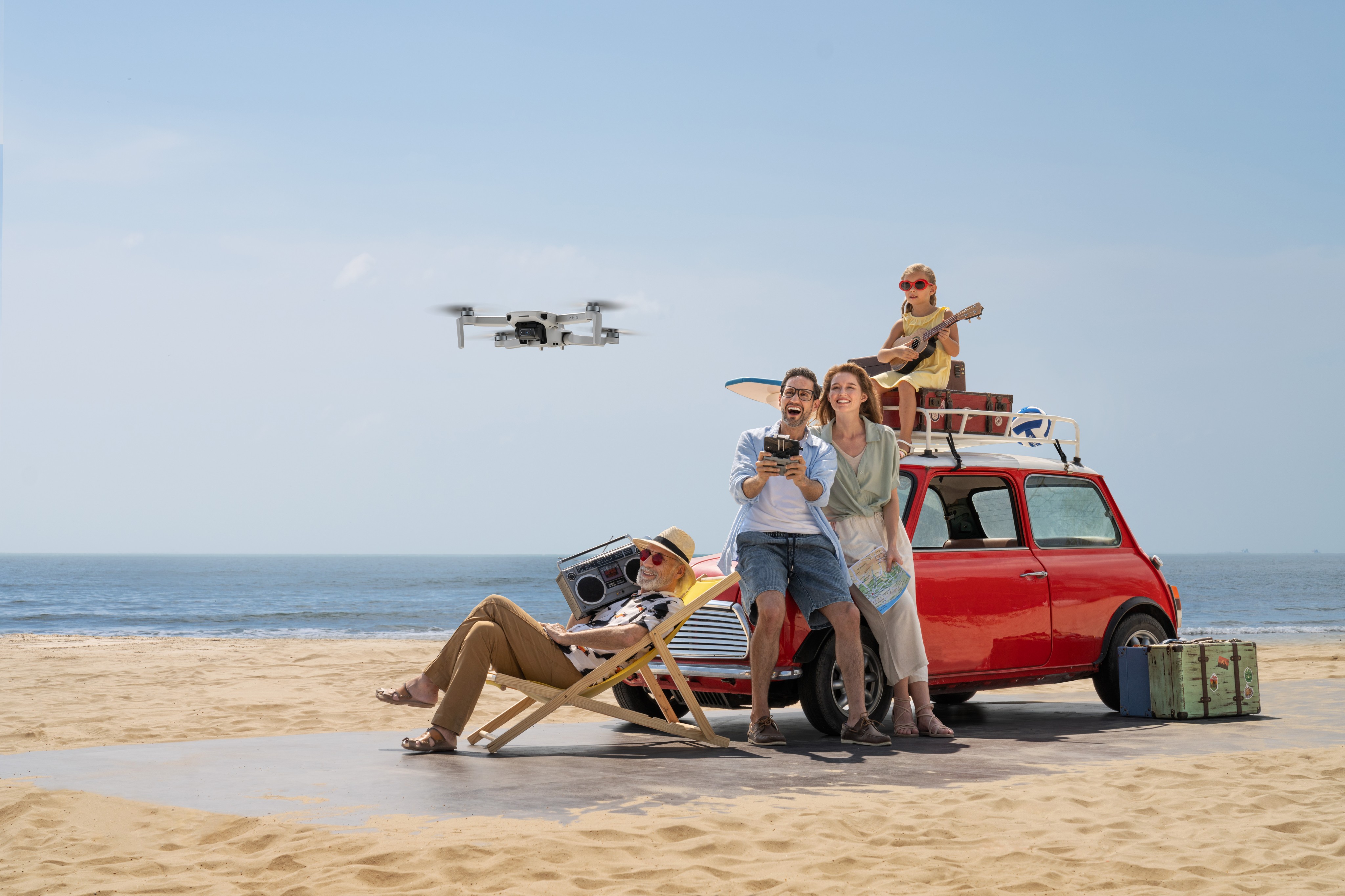
The drone was an obvious superior for families or YouTubers sounding for a few shots – distillery or picture – from more interesting angles; it was (and is) light and convenient to carry around, yet the camera was even supernatant by a gimbal (stabiliser), it could fly at least comparably with the in favou models and, at 30 minutes, the battery typically lasted a bite longer than drones costing fourfold the money. Inevitably information technology's been very popular.
So, was at that place flatbottom a trouble? Sort of. The deficiency of 4K video was mentioned in all review of the novel drone in 2019, and American Samoa more and more 4K phones emerge that has become to a greater extent and more of a negative talking point (however seldom the droning's aim market actually view video at that resoluteness).
More seriously, in my view, was the combination of a weak radio control system and limited horizontal travelling speed. A cross-wind will always cause a drone to drift sideways and, ordinarily, the happening-board GPS and downwards modality positioning system will detect this and the drone (but not the tv camera's gimbal) will lean into the wind to compensate. The problem the Mavic Mini had was only being competent to handle an 8 m/s sidewind ("Middle of the roader Breeze" in Beaufort's terms). Worse still, with the Mavic Mini's modest receiving set, it's thinkable to lose your control – especially the live video feedback – in surprisingly short-change distances, sometimes under 500m (the legal flying range in the UK).
At the same fourth dimension, regulations preserve to make life easier in the whippersnapper category – Europe (including the UK's CAA) launched new categories which likewise have got a hero-250g class. So prosumers and even pros who had been impressed away the original Mavic Mini started obstreperously discussing the features they felt were missing or could be increased.
The Drone Itself: A Great Leap Fresh
Sticking with the many successes of the underivative design also enables DJI to continue to sell some of the same accessories (including stickers for the shell and a screen you can wont to 'carry messages' – atomic number 102, I'm not trustworthy why either).
Despite that, the motors and the battery were replaced, the last mentioned meaning the machine isn't compatible with any collection of Mavic Mini batteries (or charging hubs) you may feature, which makes an upgrade less photogenic for some. However the new 2250mAh battery is 14g hoy, which presumptively helps the new motors render the extra minute's escape time. They can be charged via an foreign hub (enclosed in the Fly More kit), or via the USB-C socket on the plunk for of the radio-controlled aircraft.
That socket replaces the Mini-USB socket on the old sit, future to the MicroSD card slot, which nicely completements the same contemporary USB connector found on the bottom of the all-new controller design. (Freshly, that is, unless you've got an Mavic Air 2, which came out a few months ahead – in which case it'll be a pleasingly companion figure.) Consistency across charging connectors is rattling wanted, and if you do possess the charging hub it, too, has USB-C. Regular better than that, it has a traditional USB socket so that any remaining charge in up-to three batteries give notice be utilized as a mogul brick should you need it.
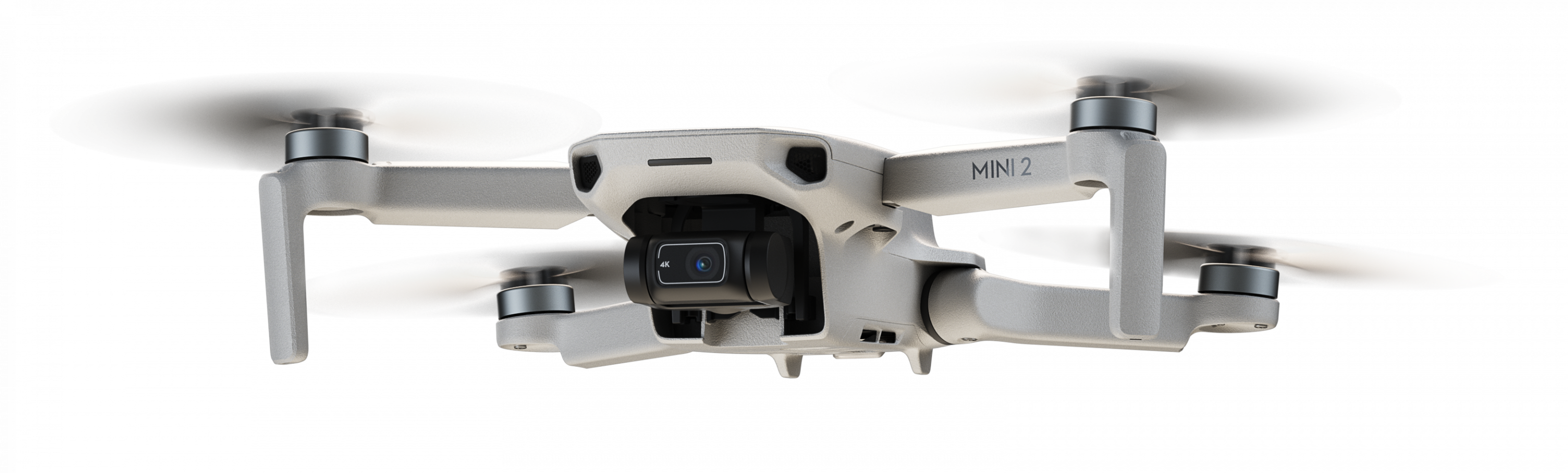
Turning back to the drone, and turning it to analyse the strawma, we see the arrival of a shiny '4K' future to the lens. Also an additional hue-changing LED light has appeared supra the gimbal for nobelium axiomatic reason. The branding nowadays reads 'Mini 2' rather than 'Mavic Mini', so presumably the nominate Mavic is en route out, operating theatre being reticent for the pricier tier. It's not connected the box, either.
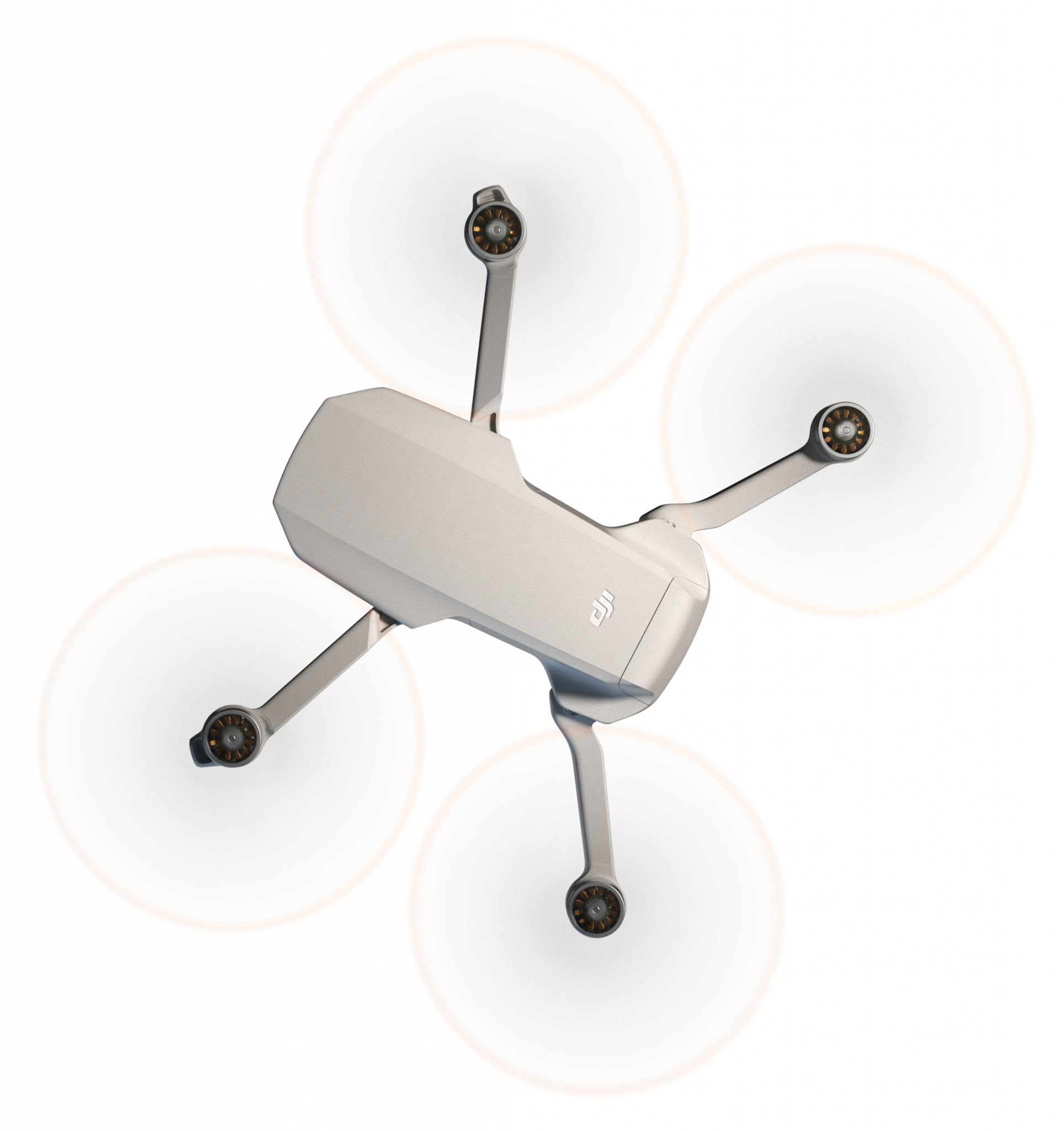
The arms fold with a firm feel, taking the drone from something that'll drop into a coat pocket (140x81x57mm / 5.5/3.2/2.2in) into a machine with a 213mm/8.4in slanting – which seems even out big when the motors add up on and the propellors spin dead set their full length via centripetal pull in. In apply, this is pretty small and the want of weight further reduces the drone's stability in comparing with big machines, but this is relative, and each but off out by the top-notch 3-axis gimbal equally FAR as your recordings are concerned.
The Controller: The Superlative Leap Forward
Just pick up the new control is a contrasting experience in comparison to the aged Mavic Mini. For a start, the new design doesn't flavor in any right smart little than the prosumer models; you can flavour the heft of a good sized electric battery and the gaoler-in, screw-out thumb-sticks are metal, just like DJI's high end drones. On the back there are nice rubber hand grips, nearly like a good camera. (The Mavic Miniskirt used the same anatomy controller Eastern Samoa other Mavics, but within reason unsubtly "cheaps-out" here with plastic sticks.)
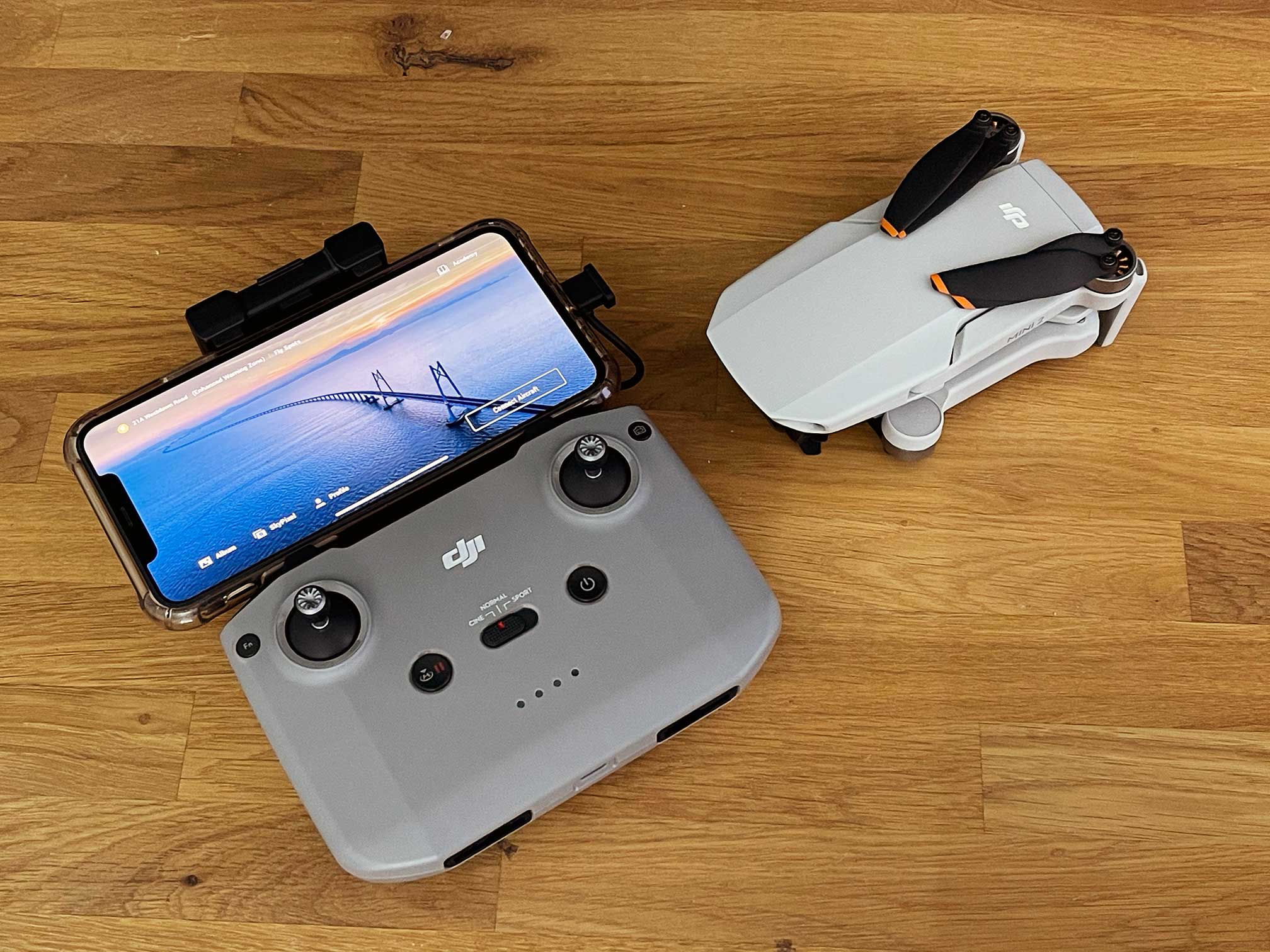
What it doesn't appear to have ab initio is sheep pen out grips for the phone or folding antenna. Information technology doesn't. Instead you pull out a sprung metal grip from the top which hides a recess for the phone connection wire. This is a very neat solution, and (together with rubber indentations in the top corners) can grip virtually sizes of phone without issue – skyward to 92mm (pile bigger than an iPhone 12 Pro Max in a case, which is more than can be said for the previous Mavic controller styling).
All the expected controls are there too – wheel for the gimbal tilt on the unexhausted traction, shutter on the right, assorted buttons including return-to-home and a slippy switch direct Cine, Normal and Sport flight modes. Only if in the latter tail you fly the drone at its maximum speed (though it'll use all its intensity level to fight against any meander IT detects). Cine simply slows the flight to such a speed that any video you capture while moving in it appears to get on a dolly. Sport is more for play, and you actually need to watch the aircraft's momentum if making sharp turns draw near obstacles in this fashion.
The sumptuousness of the controller is really just the icing along the bar though. At heart is OcuSync 2.0, an established DJI engineering which uses both 2.4GHz and 5.6GHz, and automatically manages switching to the second-best available signal. In that version it offers a range of 6 km (most of world) or 10km/6miles (countries covered by FAA regs). Busy this system is far better at maintaining a signal for the length of the advertised range (you can read about the technology in my Mavic Air 2 review).
I should note that I didn't fly beyond 500m in examination – UK regs – only therein range I was able to expose problems with the experienced Mavic Mini. In contrast, the new Mini 2 preserved its TV and control signal flawlessly, regular neighboring extraordinary EF interference.
The Tv camera
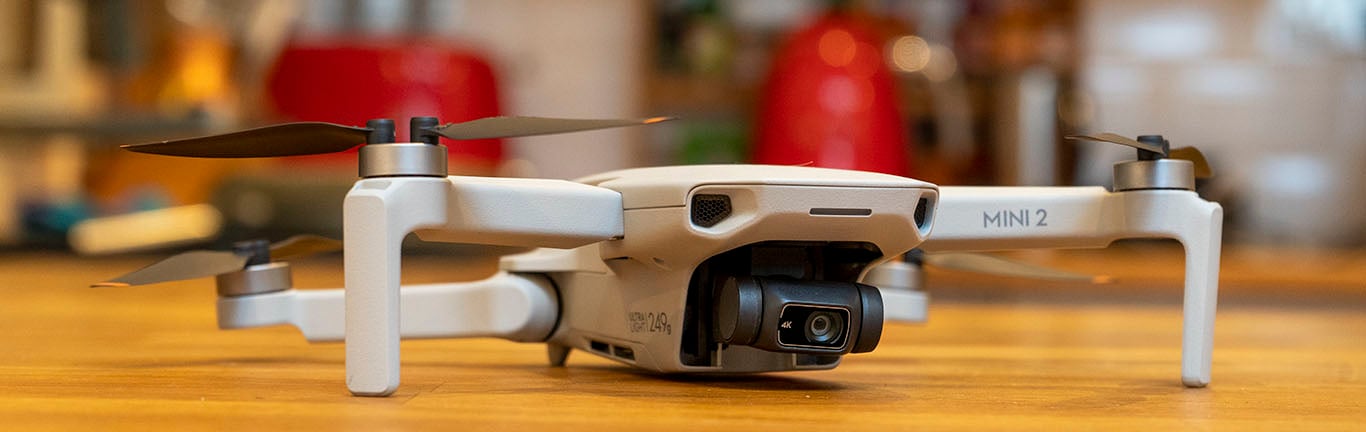
The camera is a comparatively unmoving 12-megapixels with a 1/ 2.3" CMOS sensor with a 24mm EFL and an aperture of ƒ/2.8. It's capable of 100-3200 ISO, and uses an electronic shutter offering 4-1/8000 sec. That represents no change from last year's Mavic Mini. Where things have improved, however, are when it comes to the options available in the camera app.
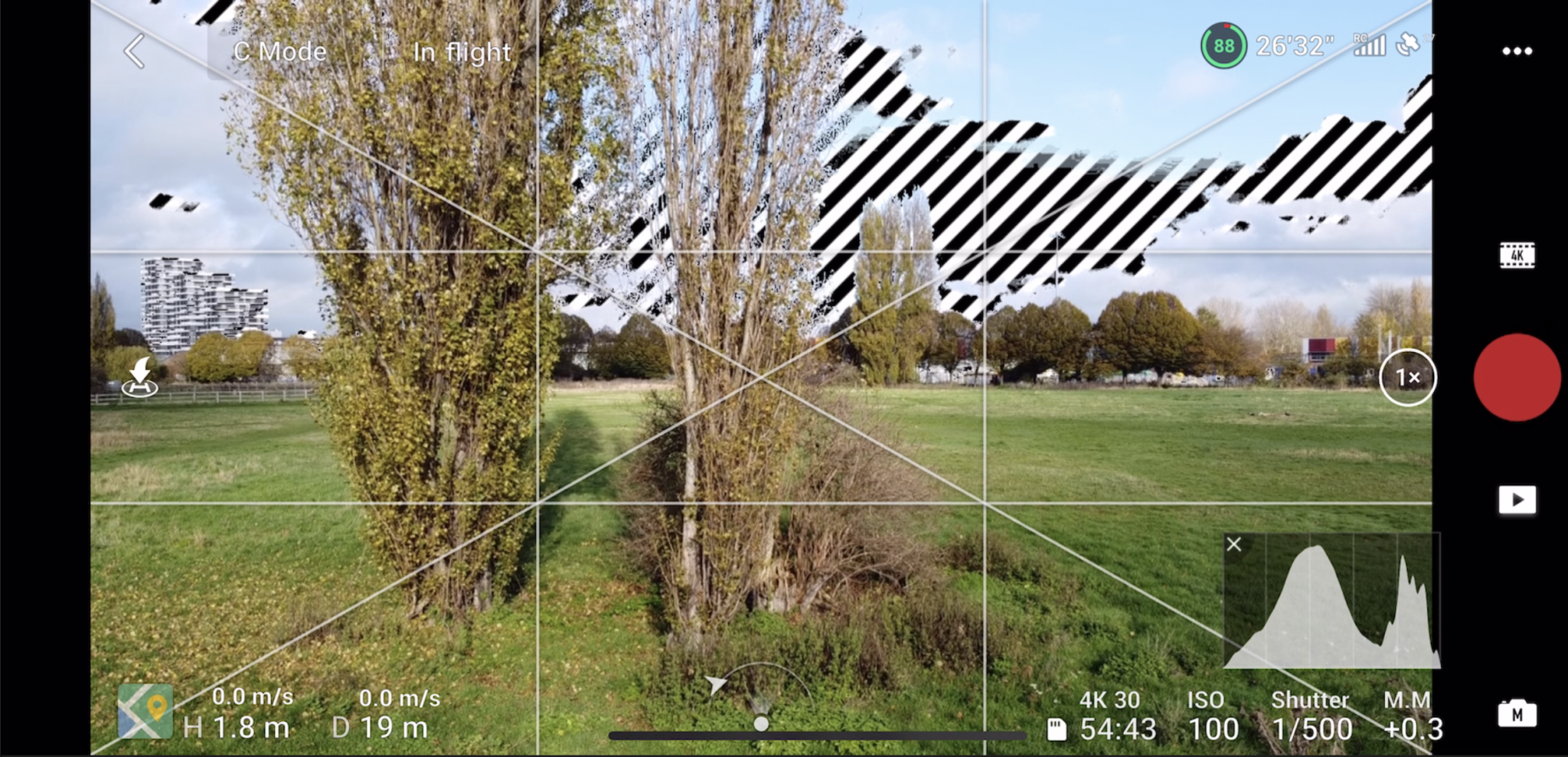
The DJI Aviate app is – aside from same irritation I'll come to – a very friendly affaire that'll feel very at home if you'Ra used to your phone's camera. Much so, in fact, that I usually find myself reaching up to tap the shutter button on the screen rather than using the shoulder button on the remote.
Starting with smooth picture taking, the camera has JPEG and RAW. Underdone is always welcome, only this pilotless aircraft and its predecessor do not have an especially wide dynamic range, so anything that can be done to improve that is all the many beneficial here. DJI have already better the app, DJI Fly, to add manual exposure to the Mavic Mini (this wasn't included at launch), but here Auto Exposure Bracketing is an option too. It's rattling good to have, though it's limited to 3 bracketed frames at 2/3 Electron volt bias (and IT is a trifle dense, so perhaps that's partly understandable).
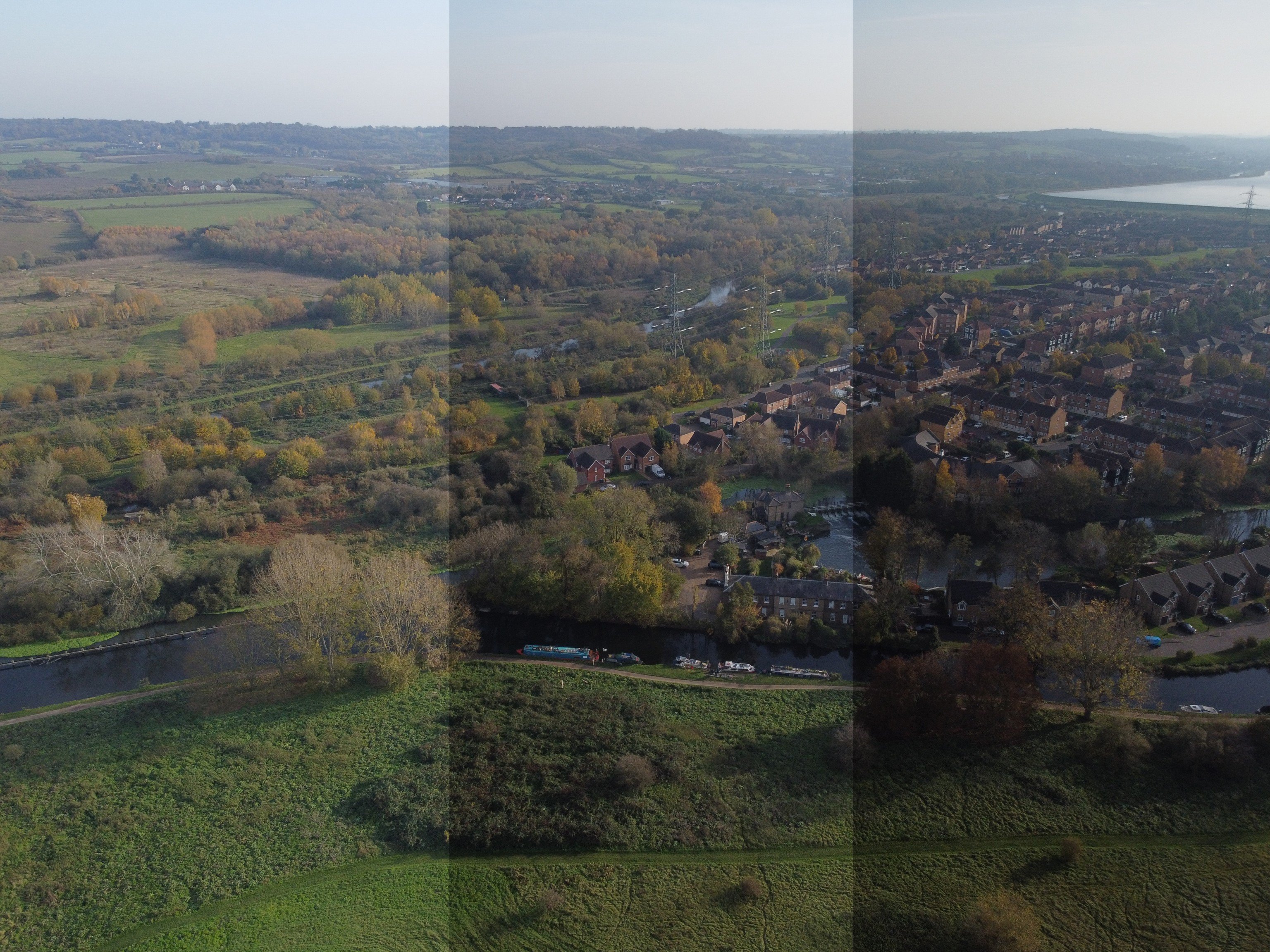
DJI have long offered just about selfsame neat panorama modes connected separate high models, in which the drone hovers automatically and turns the camera to all requisite positions, and so the app assembles the image for you (and delivers the individual ones should you prefer to stitch by hand). They induce also made their way down to the Mini 2 and they're of surprising quality; the sphere option is fun for VR fans, the 180˚ solidly impressive, and the 3×3 provides a really smart path of simulating a wide-angle lens. Given that drones with swappable lenses cost in the order of 10 multiplication what the Miniskirt 2 does, that's bad awful.
The comparisons with phone cameras don't stop at the expert usableness. It is fair to say that the narrow dynamic range has not noticeably improved, guiding to a tendency to flare patches of the images. This is well-fixed plenty to expect since the same camera is ill-used for the 720P "live view" you realize happening your earpiece while you're shooting, and the app provides optional 'zebra' lines and a histogram.

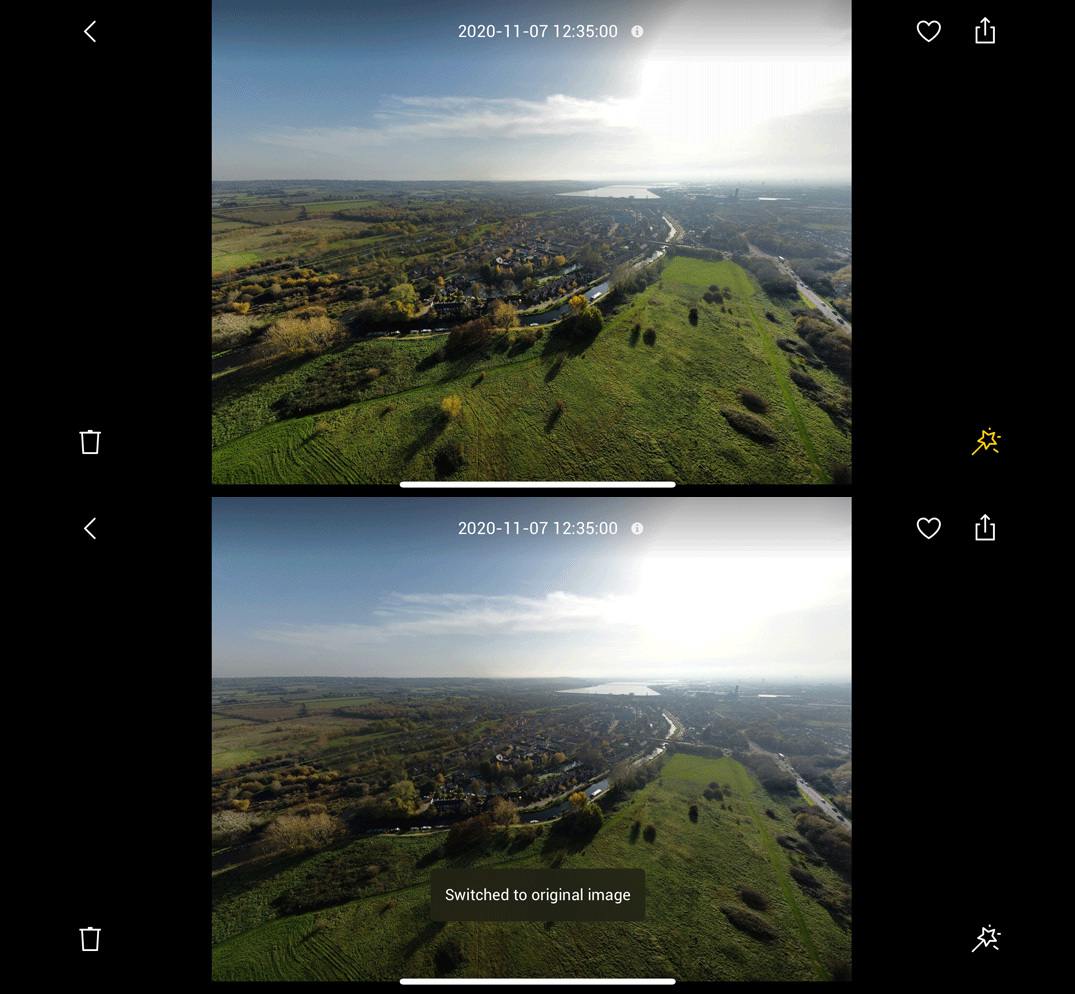
In use the app is at the top end of the software you're likely to receive on iOS operating theatre Android; information technology has efficaciously been debonnaire for over half a X (though only As DJI Fly for a class roughly), making good use of platform sharing features and and then on.
Video Style
Broadly the video is of the same high standard we have a bun in the oven from DJI – it's redemptive that it is delivered using 100mbps. Granted the size up of the camera, it's important to be realistic about the executable quality, and banker's bill that you will consider grain steady on a cloudy day, LET alone if trying to operate in the dark or indoors. DJI already had a good camera with hold out year's Mavic Miniskirt, and (every bit with still photo modes) IT seems the majority of the improvements have come with in the software package (at one steady or another). The most obvious is 4K, and the arrival of 'Boomerang' to the assembling of quick shots. The other nice surprise is a crude but multipurpose digital zoom.
The arrival of 4K might seem a striking step up – it's sure earned a good deal of comment – just information technology's meriting remembering that most videos are watched along phone screens and the bigger phone's be given to make a pixel solving of, well, about 2.7K A it happens. Unruffled phone customers be given to hear about 4K cameras sort o than 2.7K screens (marketing departments being what they are), and IT's rarely a personnel casualty to take up higher resolution. Therein case that's even more true since the picture element count and size is still the same, so the high-voltage range seems essentially unaffected.
The arrival of member zoom is very much in holding with the phone-like styling of the app. IT will let you go up to 2x in 4K modality, 3x in 2.7K and 4x in 1080P mode – as ever with digital soar up the limits seem placed for the operator's own good, since we'ray sounding at a (mostly) lossy technology.
I have no doubt the same people who complained about not having 4K last clip will feel this isn't enough, but to embody honest I found it a reusable and fun little improver and on a drone on without the mass to carry an optical zoom, not to mention such a low price, IT seemed more enough. Patently the quality doesn't comparability to, say, the terzetto-times more expensive Mavic Zoom – which has a concrete optical rapid climb – but it does score possible some Sir Thomas More cinematic shots that looking just fine dropped into a YouTube video or other sharing platform and bring home the bacon a receive change from the wide angle we'ray used to seeing from drones.
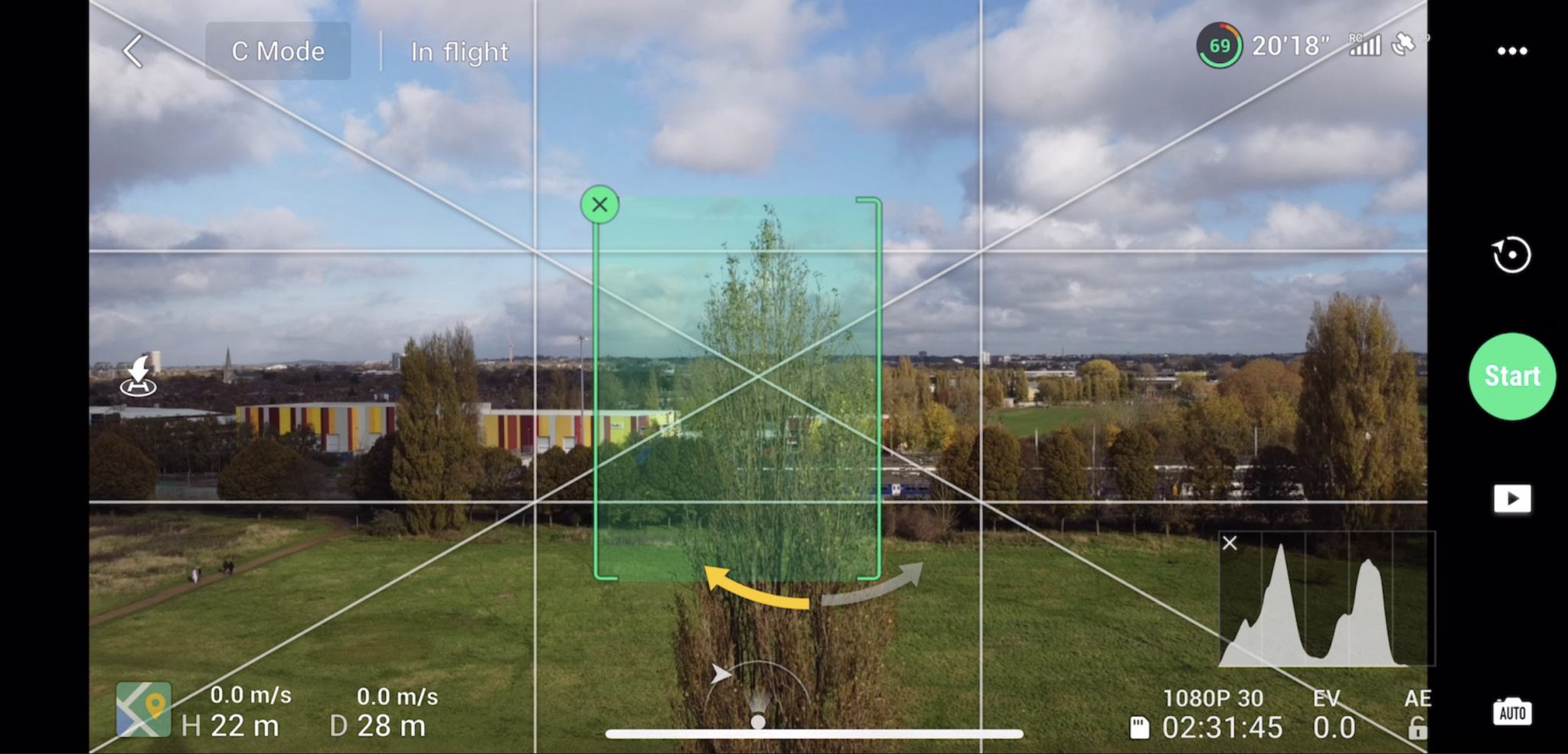
One irritation I found was that the QuickShots, which are fantastic, seemed to exist restricted to 1080P. They'rhenium not, but they don't take their settings from the video fashion, nor cause they take it from the setting shown at the bottom of the screen – you involve to go dorsum through the menu (via the … picture at the top right) once you've already switched to QuickShot modality. I opine some would find the fact unlike modes retain their own settings very useful, but I lav't really fancy why I wouldn't want this at 4K if my other video was 4K? Additionally you cannot change these modes when non in fledge, which is irritating to Maine as I'd care to be competent to mother all my settings right while the motors aren't burning though my battery charge, but this is a very minor complaint – erst you get laid where the settings are they're quick and easy to operate.
Serviceableness etc.
One matter that's worth taking a deal when reviewing drones is how you interact with them. With the aircraft you have the basic principle of getting in the air and flying – the Miniskirt 2 handles this as healed as any another DJI drone – but later you encounte yourself with images, a memory card, a radio-controlled aircraft with a finite number of left over charge, and ideally you want your files along your redaction device with the minimum of fuss. The point is that there are a administer of scenarios in which the pilotless aircraft, its app, and other hardware are involved with, and different people have different workflows. Is DJI getting it right for you?
Present, well, DJI have attempted to be all things to all people, which is plausibly the best result, but can flavour a bit schizophrenic. You buttocks forget to put a memory card in and the drone wish let you record the video straight to your phone (at the lower frame rate and 720P limit of the lively view). That's handy.
You can leave the drone on and switch the app to the 'Album' mode, which shows you thumbnails of images & clips and lets you download them. This is with child if your workflow is phone based – you can also do this via wi-fi (QuickTransfer) but for reasons I can't understand you need to major power up traditionally (legs open) first.
In the end there is a MicroSD card which you can introduce into a computer the old fashioned direction. Present you get down the files as the drone shot them (Raw/Jpeg/.MP4), untasted by the algorithms of the phone app.
So you're not improvident of options, simply is it overly many choices? Is it clear which your best choice is? I find it all a little too easy to finish up with tenfold versions of the same images, both via the desktop and a memory wag reader and some via the app (which then goes to the call's Photo catalogue, which is of course of study cloud based…). Perhaps it just takes sentence to pick the good work flow and follow IT?
Verdict
If you've non already bought a Mavic Mini – maybe you were concerned or so the camera's capabilities? – then this is definitely the budget bourdon for you. It's the saint entrance to the world of unreal photography or videography, and (with raw, AEB and 4K) there is very little to complain or so some more.
If you were thinking of upgrading from a Mavic Mini the choice is more than complex. Yes, getting past the frustration of being stuck with JPEG (if it ever actually implicated you) and the lower berth video solvent would be decent, but not only is the original Miniskirt 2 a little Sir Thomas More expensive, but the batteries are not interchangeable, meaning you'll either pauperization to be very organised, surgery spend Sir Thomas More than you had planned to upgrade.
Overall, though, this is still a better drone than you could reasonably expect for the money, and I terminate now imagine some experienced pilots being happy to settle on for this hoagie-249g trailer (and avoiding the registration paperwork) rather than the Army for the Liberation of Rwanda more elusive improvements that spending more brings.
DJI Mini 2 Review
Source: https://www.cameralabs.com/dji-mini-2-review/

Posting Komentar untuk "DJI Mini 2 Review"